


Nepal has contributed just 0.01% of global CO2 emissions since 1751, yet it remains one of the most vulnerable countries to climate change. On 26 August 2026, Nepal was hit by a devastating flood which damaged homes, roads and bridges and hydropower plants, affecting more than 84,000 people (UNICEF, 2026). The devastation across Rasuwa, Dhading, and Nuwakot is a stark reminder of Nepal’s vulnerability and under preparedness.
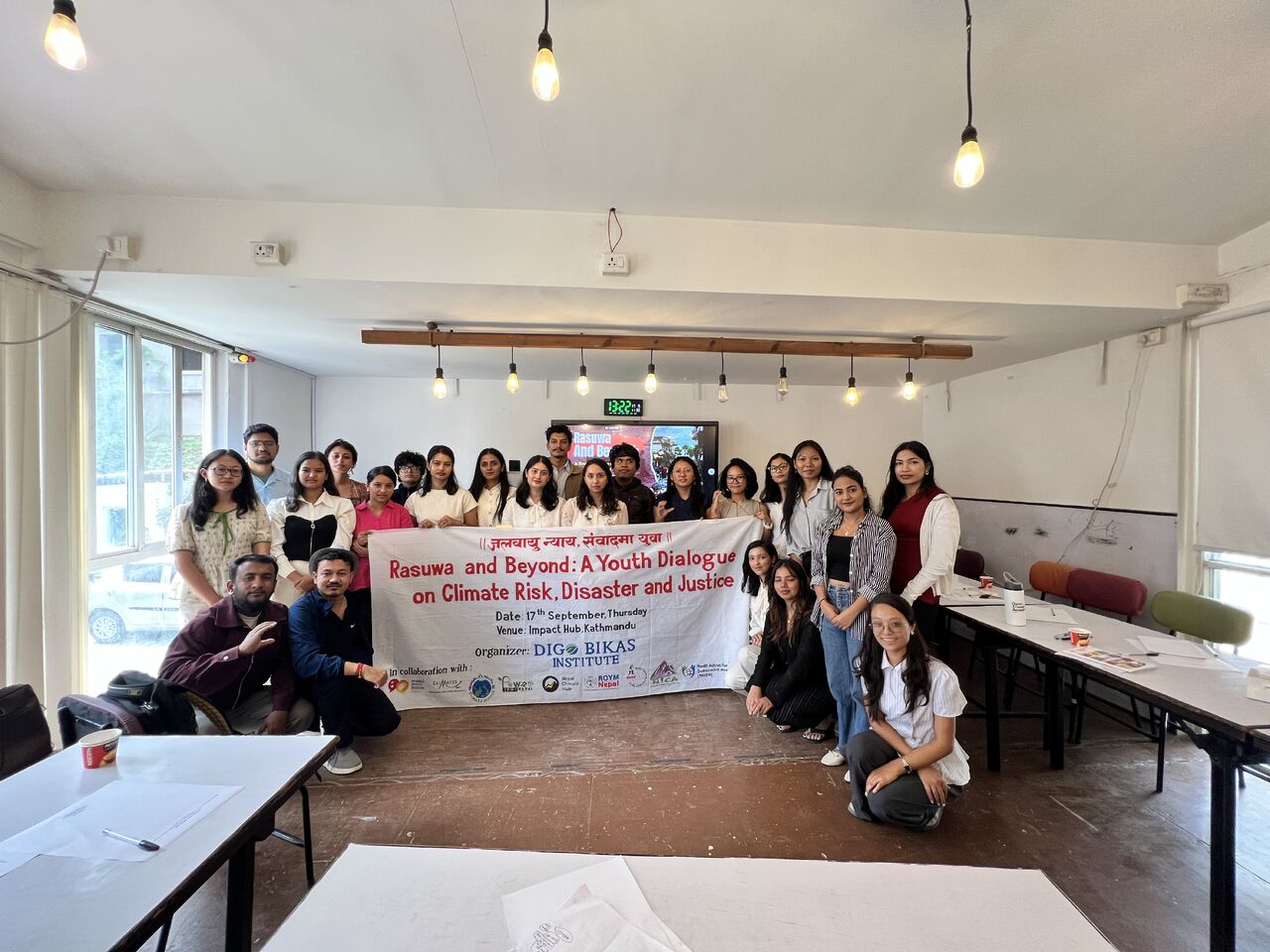
On September 17, I attended Rasuwa and Beyond: A Youth Dialogue on Climate Risk, Disaster and Justice, hosted by Digo Bikas Institute. The conference brought together youth leaders, researchers, activists and practitioners to share experiences of loss and damage from the flood and to discuss the role of youth in climate adaptation. The conference focused on two major themes: climate finance and indigenous communities.
Climate finance: who covers the cost?
Vulnerable countries that face economic and non-economic losses usually have the fewest resources to use for recovery, which slows their development even further. Following the Rasuwa flood, Nepal has requested US$20 million from the global climate Loss and Damage Fund. Yet the fund has paid out nothing despite requests from at least 119 countries (Gopalakrishnan, 2026). The fund was created during the 27th Conference of Parties in Egypt in 2022. It was an agreement between nations to establish a multilateral loss and damage fund to support communities in minimising and addressing damages and risk. The fund announced that it was ready to receive contributions and will start financing projects in 2025 during COP29 in Baku. The conference highlighted that the member nations have no legal obligations to contribute to the fund and the fund remains under supported. The conference called for transparent climate finance and legal accountability, so that promises made on paper reach the communities who need them.
Indigenous knowledge: who gets a say?
Nepal is home to many indigenous communities, yet their knowledge is rarely acknowledged or included in climate decision-making. Ms. Pema Wangmo Lama, a speaker at the conference, who works on the frontline with these communities, described that houses built after the 2015 earthquake were never used because residents were not consulted and the designs did not suit their needs. The same gap appears in climate planning: communities are barely informed about the Local Adaptation Plans of Action (LAPA) or the National Adaptation Programme of Action (NAPA). The speaker highlighted the need for consultation and integration of indigenous knowledge in adaptation projects.
The speaker also called for decolonising climate action, which starts with asking who a solution is really for and whether it works. Too often, climate solutions can be delivered to communities as a list of restrictions. Yet indigenous communities have managed ecosystems for generations and are widely recognised as stewards of the land. The more effective path for climate adaptation is to work with them, drawing on their knowledge to manage ecosystems rather than overriding it.
Going forward
It was encouraging to see youths from interdisciplinary backgrounds and knowledge coming together for a common goal and effort to care for our world. The conference was an important reminder for us to decolonise the climate action we participate in and recognise communities and integrate their knowledge in climate planning.
References
Gopalakrishnan, T. (2026) Nepal isn't the only disaster-struck country waiting for money from the global climate Loss and Damage Fund. Available at: https://www.preventionweb.net/news/nepal-isnt-only-disaster-struck-country-waiting-money-global-climate-loss-and-damage-fund (Accessed: 29/09/2026).
UNICEF (2026) Nepal floods explainer. Available at: https://www.unicef.org.au/nepal-floods-explainer (Accessed: 29/09/2026).