


After the Flood: Who Gets to Rebuild, and Who Gets Left Behind?
When the cameras leave and emergency relief ends, will the people affected by Nepal's floods have the resources to rebuild their lives, or will recovery deepen existing inequalities?
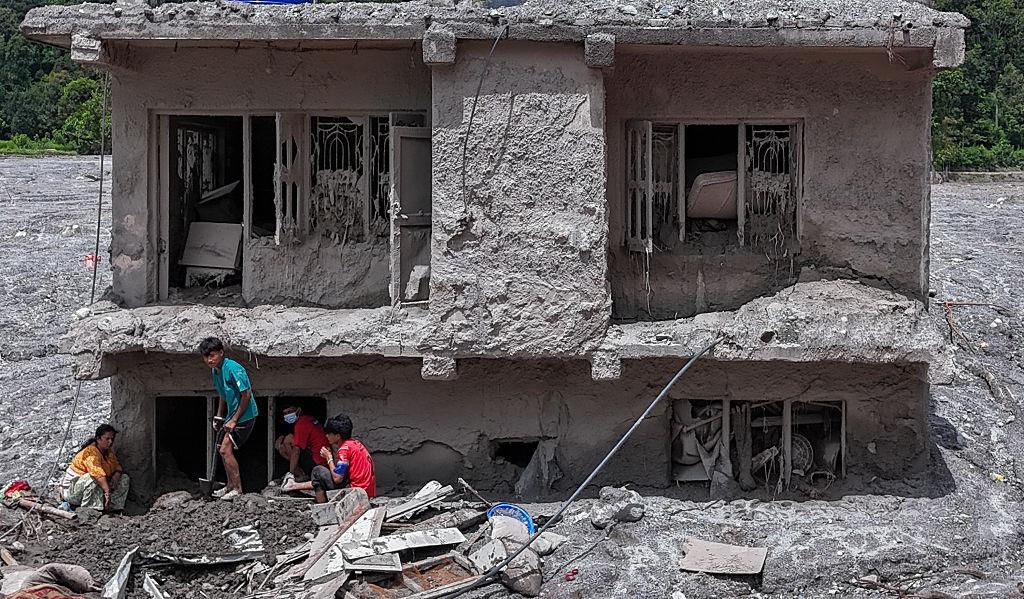
The waters may recede, but a disaster does not end when the flooding stops. For families who have lost their homes, farmland, shops or sources of income, the hardest part may be what comes next: finding somewhere safe to live, earning a living again, and rebuilding without falling into debt.
Nepal's August 2026 floods exposed the scale of this challenge. The government's preliminary assessment estimated that recovery and reconstruction would require around Rs 723 billion. Yet the cost of rebuilding is not only a question of money. It is also a question of who can access the resources needed to start again.
Not every family has the same chance of recovery.
Not everyone starts from the same place
Imagine two families whose homes have both been damaged by a flood. One has savings, relatives who can provide temporary shelter, and land documents ready for reconstruction assistance. The other depends on daily wages, has lost its small business, and has nowhere else to stay.
Both families have suffered. But their ability to recover is very different.
For households with savings and secure land, rebuilding may be difficult but possible. For families already struggling financially, the loss of a home or livelihood can create a chain of problems. They may need to borrow money, postpone repairs, or use savings meant for their children's education and healthcare.
Recovery can be especially difficult when people cannot safely rebuild where they previously lived. Relocation may offer greater protection from future hazards, but it can also separate families from their farmland, workplaces, neighbours and community networks.
These challenges are not merely hypothetical. ODI Global's October 2026 analysis of Nepal's recovery needs draws lessons from the 2015 earthquake reconstruction, when conditional housing grants, construction costs, limited access to information, debt and land-tenure problems slowed recovery for some households.
The lesson is clear: announcing assistance does not guarantee that everyone can access it. A recovery programme may exist on paper while remaining difficult to navigate for the people who need it most.
Money announced is not recovery delivered
The government's preliminary estimate of Rs 723 billion shows how extensive Nepal's recovery needs are. The damage extends beyond houses to roads, bridges, public services, businesses and livelihoods. Rebuilding these systems matters because families cannot fully recover if they cannot reach markets, access healthcare or return to work.
On 22 October, the United Nations Fund for Responding to Loss and Damage approved a US$20 million allocation for Nepal's flood recovery. This is an important step, but Nepal still needs to complete the process required to access the funding.
The figures illustrate the enormous financing challenge. They should not be treated as directly equivalent budgets, since the funding and the overall recovery estimate may cover different purposes. More importantly, an approved allocation is not the same as money reaching an affected household.
The questions that matter are practical: When will support arrive? Who will qualify? Will the application process be accessible? And will assistance account for families who have lost not only their homes but also the means to rebuild them?
The answers will help determine whether recovery reduces hardship or leaves already disadvantaged households struggling for longer.
What would a fair recovery look like?
A fair recovery should be measured by more than the number of houses rebuilt or roads repaired. It should also be measured by whether affected people can regain safety, income and control over their futures.
First, assistance must be accessible. Eligibility rules should be clear, information should reach remote communities, and families should have a way to appeal decisions. Support should not depend on a person's ability to navigate complicated paperwork.
Second, livelihoods must be part of reconstruction. A repaired house offers limited security if its occupants have lost their jobs, farmland, shop or access to customers. Recovery planning must consider how people will earn a living again.
Third, affected communities must have a voice. Decisions about relocation, safer settlements and reconstruction should involve the people who will live with the consequences. Their knowledge of local conditions and livelihoods matters.
Finally, recovery must be transparent. Governments and funding partners should publicly report how assistance is allocated, who receives it and whether it is reaching those facing the greatest barriers.
These measures cannot remove every hardship. But they can help ensure that recovery is not determined simply by how much a family can afford to lose.
Rebuilding should not deepen inequality
Disasters expose existing vulnerabilities, but the decisions made afterward can either reduce them or make them worse. If families with savings rebuild quickly while poorer households remain displaced, the consequences of the same disaster may last very different lengths of time.
Climate justice is often discussed in terms of global emissions, international finance and responsibility for climate-related losses. Those debates matter. But justice must also be visible in the recovery process itself: in who receives support, who helps make decisions, and who is able to rebuild a secure life.
Nepal cannot meet recovery needs of this scale through the efforts of affected families alone. Public institutions and international partners have important roles to play. Their responsibility should extend beyond responding to the immediate emergency towards supporting a recovery that is safe, inclusive and accountable.
When the cameras leave, the responsibility to recover does not disappear. For many families, that is when the longest part of the struggle begins.
The true measure of recovery is not simply how quickly Nepal replaces what the flood destroyed. It is whether the people who lost the most are given a fair chance to rebuild their lives with safety and dignity.
Sources
The Kathmandu Post, Rapid assessment puts Bhotekoshi recovery needs at Rs723 billion, 10 September 2026.
ODI Global, After the flood: supporting recovery, reconstruction and resilience in Nepal, 12 October 2026.
OnlineKhabar English, Loss and Damage Fund approves $20 million grant for Nepal’s flood recovery, 23 October 2026.
UNDP Nepal, Nepal’s flood recovery starts with helping people rebuild their lives, 8 October 2026.